


The Owen Daniels Marine & Naval Market Update

The UK marine and naval sector is entering a period of sustained investment, driven by increased defence spending, fleet modernisation, shipbuilding and growing demand for maritime technology.
Major programmes including Type 26, Type 31 and Fleet Solid Support are strengthening the UK shipbuilding pipeline, while investment in naval infrastructure and maritime autonomy is creating further opportunities across engineering, manufacturing and technology. As activity increases, access to specialist skills, supply chain capability and modern infrastructure will be critical to supporting long-term programme delivery.
Programme & Market Activity
The sector continues to benefit from significant investment across naval capability and UK shipbuilding, including:
- Type 26 export programme with Norway
- Type 31 frigate production progressing
- Fleet Solid Support ships under construction
- Naval infrastructure investment across Clyde, Devonport and Portsmouth
- Growing focus on maritime autonomy and uncrewed systems
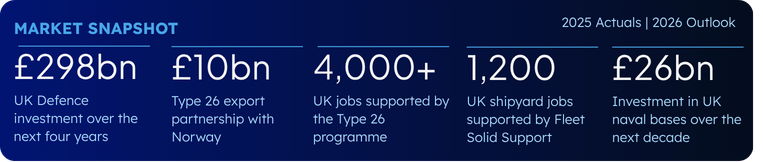
The £10bn Norway partnership is expected to support more than 4,000 UK jobs and over 400 British businesses, while the Fleet Solid Support programme is creating around 1,200 shipyard jobs and hundreds of apprenticeships.
Workfoce & Talent Insight
The marine and naval sector continues to see strong demand for highly skilled engineering and technical professionals. As major programmes progress, organisations are competing for specialist capability across:
- Naval architecture and marine engineering
- Mechanical and electrical engineering
- Systems engineering and integration
- Welding, fabrication and production
- Project management and programme delivery
- Digital, autonomous and advanced manufacturing technologies
Industry Transformation
Technology is increasingly reshaping the UK's maritime capability, with investment accelerating across autonomous systems, AI, digital engineering and advanced manufacturing.
The £26bn naval infrastructure programme will modernise the UK's three main naval bases, while new investment in maritime autonomy is supporting the development of advanced technologies and specialist skills.
Competing for Maritime Talent
Shipyards, naval bases and the maritime supply chain are competing for the same specialist engineers, fabricators and systems professionals as defence, aerospace, energy and advanced manufacturing. With Type 26, Type 31 and Fleet Solid Support running in parallel, workforce planning, apprenticeships and long-term talent strategies are becoming central to programme delivery.
Market Outlook & Talent Insight
The UK marine and naval sector is entering a sustained period of investment, programme delivery and technological development.
Major shipbuilding programmes, export opportunities and infrastructure investment are creating long-term demand across engineering, manufacturing and technical functions. At the same time, the growth of autonomous and digital maritime technologies is broadening the skills required across the sector.
For employers, access to specialist talent will remain critical to delivering increasingly complex programmes and strengthening long-term maritime capability.
Sources & Further Reading


